Quick Facts
- Category: Science & Space
- Published: 2026-05-04 20:23:33
- Docker and Black Duck Joint Release Eliminates Container Security Noise with Automated VEX Integration
- Kubernetes v1.36: Declarative Validation Goes GA – Your Questions Answered
- Python 3.15 Alpha 4: 10 Crucial Updates Every Developer Should Know
- 8 Critical Insights Into the Axios NPM Supply Chain Attack by a North Korea-Linked Actor
- Why Maintenance, Not Wave Power, Is The True Hurdle For Ocean Energy
The Universal Language of Life
The genetic code is often described as the universal language of life, shared by nearly all organisms on Earth. With only minor variations, the same triplet combinations of DNA bases—codons—encode the same set of 20 amino acids that form the building blocks of every protein. This remarkable consistency has led scientists to believe that the code dates back to the last universal common ancestor (LUCA) of all living things. Yet, the origins of this system remain one of biology's greatest mysteries.
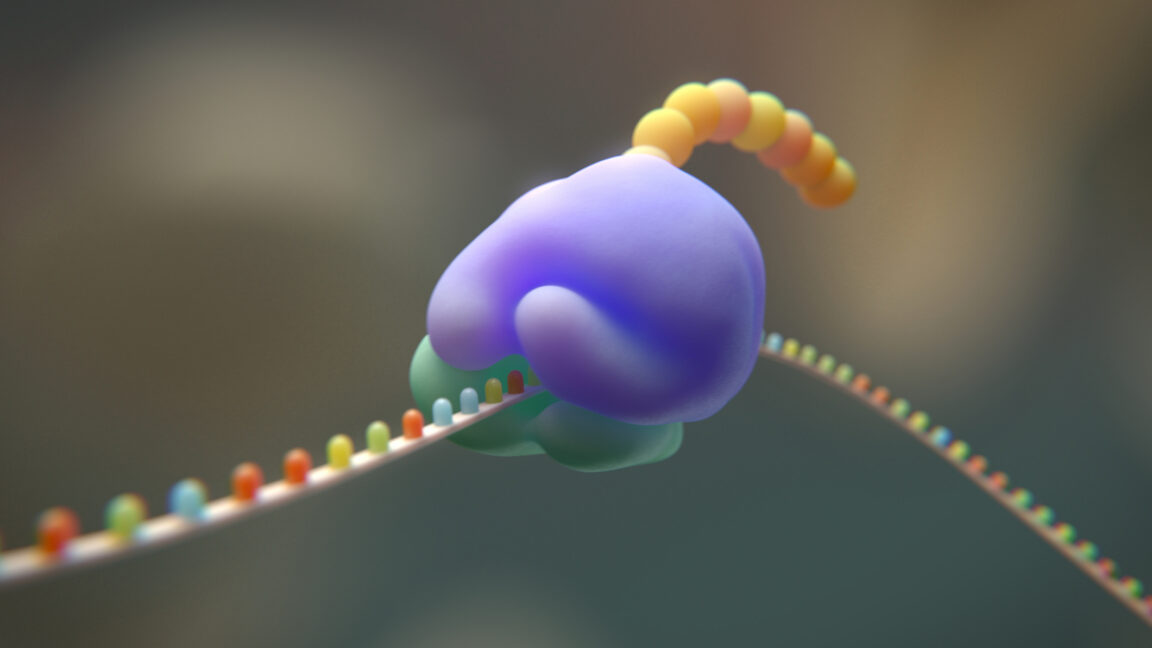
Most evolutionary hypotheses propose that earlier life forms operated with a simpler, partial genetic code, using fewer than 20 amino acids. To test these ideas, a multidisciplinary team from Columbia University and Harvard University set out to investigate whether it's possible to strip one of the 20 amino acids from the code entirely. As a proof of concept, they engineered a key part of the ribosome—the cell's protein-making machinery—that could function without an otherwise essential amino acid: isoleucine.
Why Remove an Amino Acid?
At first glance, the goal might seem counterintuitive. Why would anyone want to reduce the alphabet of life? The answer lies in both curiosity and practical application.
Most prior work in synthetic biology has focused on expanding the genetic code—adding unnatural amino acids to enable novel chemistry, such as incorporating fluorescent tags or creating proteins with enhanced properties. However, shrinking the code offers a different perspective. By demonstrating that life can survive with fewer building blocks, researchers can gain insights into the early evolution of the code. Additionally, a streamlined code could be useful for engineering organisms with simplified cellular machinery, potentially reducing the risk of horizontal gene transfer or creating more predictable biological systems.
The Ribosome Engineering Challenge
The team chose to focus on isoleucine, one of the 20 standard amino acids. Isoleucine is classified as an essential amino acid for humans (it must come from diet), and it plays a critical role in protein structure and function. The researchers aimed to see if they could modify a portion of the ribosome—the molecular machine that translates mRNA into protein—so that it no longer required isoleucine for its assembly or activity.
How They Did It
The method involved a combination of genetic engineering and directed evolution. First, the scientists identified specific sites in ribosomal proteins and rRNA where isoleucine residues are normally present. Then, using targeted mutagenesis, they replaced isoleucine with other amino acids, such as leucine or valine, which are chemically similar. They also redesigned the surrounding sequence to accommodate the substitution. After multiple rounds of selection, they isolated a version of the ribosome that functioned without any isoleucine in the engineered region.
Results and Implications
The modified ribosome was able to synthesize proteins at a reduced but measurable efficiency. This showed that the loss of isoleucine at specific positions is not lethal—a key finding. It suggests that the genetic code is more plastic than previously thought, and that life could have emerged with a smaller set of building blocks.
What This Means for Evolution
The experiment lends experimental support to the long-standing hypothesis that early life used a reduced amino acid repertoire. The ability to remove isoleucine without catastrophic failure implies that the code may have gradually expanded over evolutionary time. Other researchers have proposed that the first genetic code only used about 10 amino acids, and that the remaining 10 were added later through duplication and diversification of metabolic pathways.
Future Directions and Practical Uses
This work opens several exciting avenues:
- Further streamlining: Could we remove additional amino acids, possibly down to a minimal set of 10 or even fewer?
- New organisms: Creating bacteria with a 19-amino-acid code could serve as a biocontainment strategy—such organisms would not survive outside the lab due to their dependency on supplemented amino acids.
- Understanding disease: Mutations that affect the ribosome often lead to serious conditions (e.g., Diamond-Blackfan anemia). Studying engineered ribosomes helps clarify how such mutations can be tolerated or compensated.
Challenges Ahead
While the proof-of-concept is promising, significant hurdles remain. The modified ribosome was less efficient, and global removal of isoleucine from all proteins would likely be lethal. Future work must address how to compensate for the loss of an amino acid across the entire proteome. Moreover, the team only altered a small part of the ribosome; fully substituting isoleucine everywhere in the cell would require extensive re-engineering of thousands of proteins.
Conclusion
The Columbia-Harvard study is a bold step in rewriting the rules of life. By demonstrating that the ribosome can operate without isoleucine, they have shown that the genetic code is not an unchangeable monolith but a flexible system that can be edited. This research not only deepens our understanding of life's origins but also paves the way for synthetic organisms with custom-designed codes—potentially safer, more efficient, and capable of producing molecules that nature has never seen before.
This article incorporates information from the original research published in Science Advances and various expert commentaries.