Quick Facts
- Category: Science & Space
- Published: 2026-05-04 20:21:43
- Exploring the Starry Spiral NGC 3137: A Hubble Q&A
- Star Wars Games: Essential Titles and Their Unique Stories
- Strengthening Threat Intelligence: Criminal IP and Securonix ThreatQ Unite for Context-Driven Security Operations
- Meaning Crisis Declared Epidemic Among Youth, Harvard Professor Warns
- Mastering Process-Level Monitoring with Swift System Metrics 1.0
A New Era for Violin Making
For centuries, violin makers—known as luthiers—have relied on trial and error, intuition, and generations of handed-down knowledge to shape an instrument’s unique voice. The craft demands a deep understanding of materials, geometry, and acoustics, often requiring decades of experience. Now, engineers at the Massachusetts Institute of Technology (MIT) have introduced a groundbreaking computer simulation that could transform this painstaking process. Their virtual violin, detailed in a study published in the journal npj Acoustics, is a physics-based model capable of reproducing the precise acoustics of a real instrument—including the nuanced sound of a plucked string.
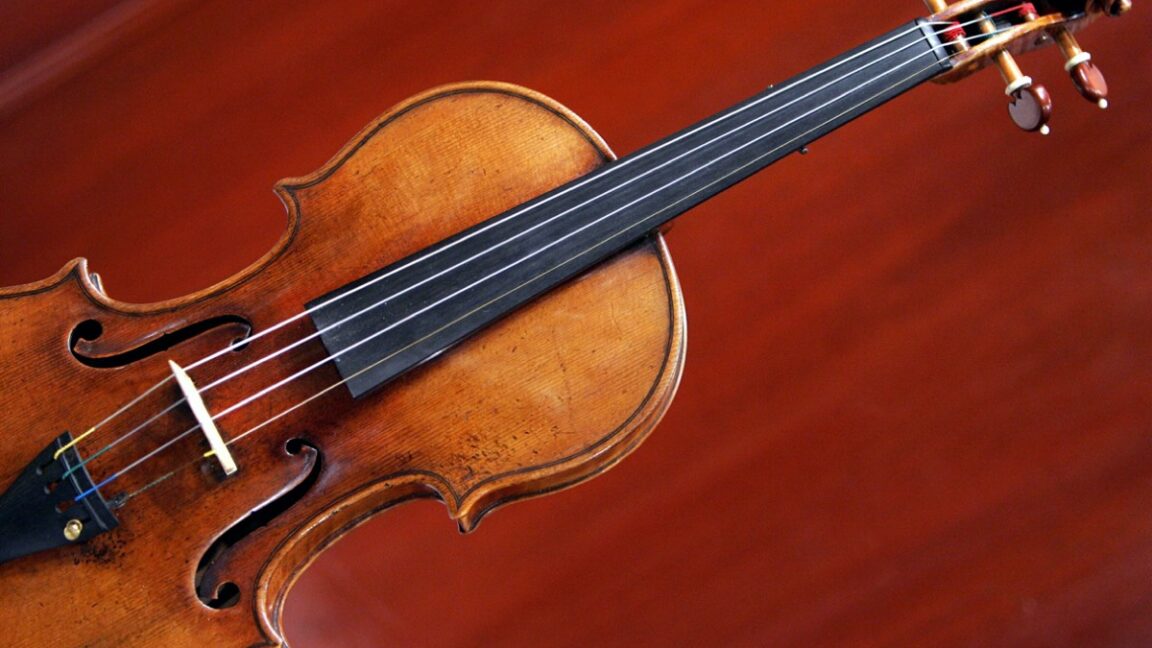
Unlike conventional audio software that mimics violin sounds by averaging thousands of recorded notes, the MIT simulation starts from the fundamental physics of how vibrations move through wood, air, and strings. “We’re not saying that we can reproduce the artisan’s magic,” said co-author Nicholas Makris. “We’re just trying to understand the physics of violin sound, and perhaps help luthiers in the design process.”
How the Virtual Violin Works: Physics-Based Simulation
The MIT model departs sharply from standard digital sound libraries. Those libraries rely on sampling—recording a real violin playing each note at different volumes and articulations, then blending the results. While effective for playback, this approach averages out the subtle variations that give each instrument its character. The MIT simulator, in contrast, computes sound from first principles, modeling every vibration of the strings, the resonance of the body, and the radiation of sound into the air.
The team built the simulation by solving the wave equation for a simplified but physically accurate violin geometry. Parameters such as wood density, thickness of the plates, and the tension of the strings can be adjusted in the software, allowing luthiers to hear how a change in design would alter the sound—before ever cutting a piece of maple or spruce. According to the paper, the tool can reproduce the timbre and pitch of a plucked string with high fidelity, closely matching recordings of real instruments.
The Quest for the Golden Age Sound
One of the most tantalizing mysteries in violin acoustics is the secret behind the instruments of the “Golden Age”—particularly those made by Antonio Stradivari, the Amati family, and Giuseppe Guarneri in Cremona, Italy, between the 16th and 18th centuries. These violins are revered for their warm, powerful, and complex tones, and researchers have long debated whether the superior sound stems from the wood, the varnish, the geometry, or some combination.
The MIT virtual violin is not intended to solve that debate directly, but it offers a powerful new tool for exploring the many variables involved. A violin’s acoustic complexity arises from hundreds of interacting factors: the arching of the top plate, the thickness of the back, the f-hole shape, the type of glue, the age of the wood, and even the humidity during construction. The simulation allows researchers to isolate each factor and test its effect on the overall sound. For example, luthiers could simulate a slightly thinner bass bar to see if it enhances low-frequency response, or adjust the graduation of the top plate to find a brighter tone.
Key Acoustic Variables in Violin Design
- Wood density and grain: Different densities affect vibration speed and resonance frequency.
- Plate thickness: Thicker plates produce a darker sound; thinner plates are brighter but may lose sustain.
- F-hole size and shape: Changes affect the air cavity resonance, influencing the instrument’s power and projection.
- String tension: Higher tension increases volume but can reduce responsiveness.
- Varnish composition: Though debated, varnish may dampen or enhance certain frequencies.
Implications for Luthiers and Future Research
The MIT team emphasizes that their virtual violin is not meant to replace the luthier’s artistry. “We’re just trying to understand the physics,” Makris said. Instead, the tool is envisioned as a design assistant—a way to quickly test ideas that would take weeks of manual woodworking to evaluate. A luthier could, for example, simulate the effect of using a different type of maple for the back, or a different arching profile, and listen to the result within minutes.
In addition to aiding craftspeople, the simulation could advance academic research into violin acoustics. By providing a controlled, repeatable environment, it allows scientists to systematically test hypotheses about what makes a Stradivarius special. Future versions of the tool might incorporate more detailed geometries, such as the precise shape of the scroll or the purfling, and even model the interaction of multiple strings being bowed simultaneously.
Conclusion: A Virtual Laboratory for the Art of Sound
MIT’s virtual violin opens a new frontier in the intersection of computation and craftsmanship. While it will never replicate the intuition born from a century of tradition, it offers a powerful, low-cost way to experiment with design variables that have been shrouded in mystery for ages. As luthiers begin to incorporate this tool into their workshops, the line between empirical art and scientific analysis may blur—leading to violins that are not only beautiful to look at, but whose voices are precisely tuned to the player’s desire.
For more on the physics behind the simulation, skip to the technical overview. To read about the historical context of the Golden Age violins, click here.