Quick Facts
- Category: Finance & Crypto
- Published: 2026-05-08 21:55:16
- AI Agent Tool Registry Poisoning: Critical Security Gap Exposed
- Solar Revolution: Australian Company Powers World’s Smallest Island Nation Away from Diesel Dependency
- Musk's Terafab Project: $55 Billion Semiconductor Facility in Rural Texas Could Reach $119 Billion Investment
- Navigating Prediction Markets for Rare Disease Outbreaks: A Comprehensive Guide
- Breaking: V8 Drops Sea of Nodes – Switches to Turboshaft for JavaScript Performance
Introduction
In a significant move toward modernizing Bitcoin mining infrastructure, seven prominent mining pools and organizations have officially joined the Stratum v2 Working Group. The working group, originally founded in 2022 by Braiins and Spiral, aims to develop and maintain the Stratum v2 protocol as an open, vendor-neutral standard that benefits the entire mining ecosystem.
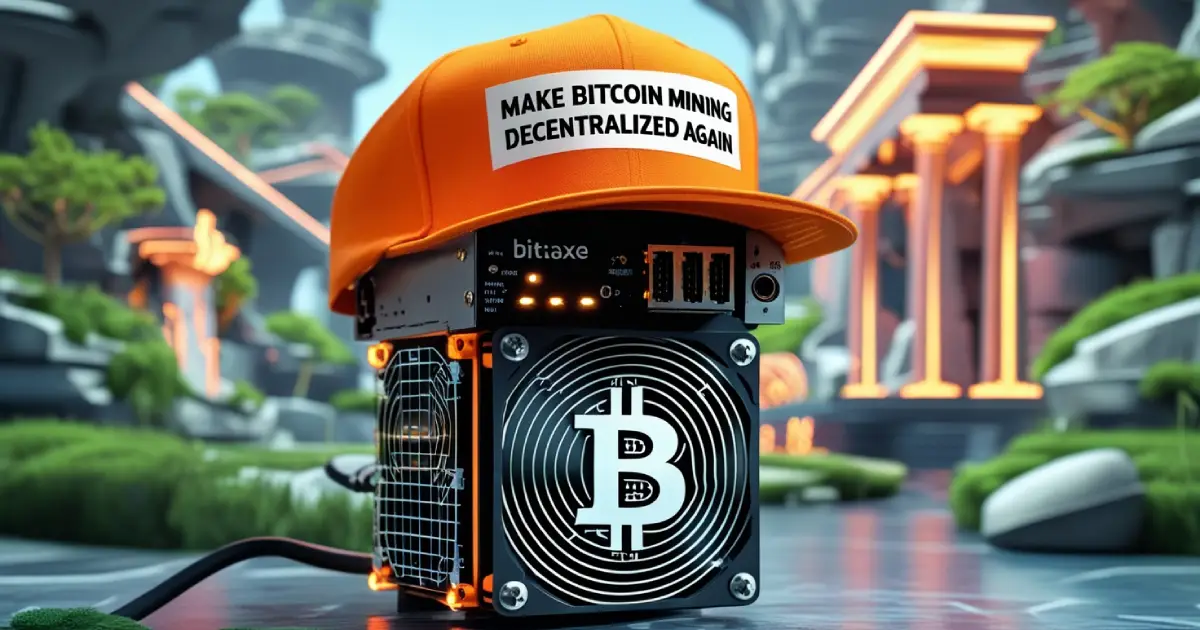
The newly onboarded members include ANTPOOL, Block Inc, F2Pool, Foundry, Spiderpool, MARA Foundation, and DMND. Their participation signals growing industry consensus that Stratum v2 represents the future of mining communication.
What is Stratum v2?
Stratum v2 is an upgrade to the original Stratum mining protocol that has been the backbone of Bitcoin mining for years. While the original protocol served its purpose, it lacked several features that have become critical as mining scales globally. Stratum v2 introduces:
- Enhanced efficiency – Better management of large mining fleets with reduced bandwidth consumption.
- End-to-end encryption – Protecting communication between miners and pools from eavesdropping or tampering.
- Improved security – Eliminating vulnerabilities present in the original protocol.
- Decentralization support – Allowing individual miners to construct their own block templates when working with compliant pools.
This last feature is particularly important because it gives miners more autonomy and reduces the power of centralized pool operators over block content.
Why This Matters for Bitcoin Mining
The onboarding of these major entities is not just a symbolic gesture. It represents a concrete step toward real-world implementation and interoperability. As Andy Zhou, CEO of ANTPOOL, stated: “We’re proud to support the broader adoption of Stratum V2. Aligning around an open, interoperable standard enables the industry to collaborate more effectively and drive improvements in efficiency, security and decentralization.”
Kenway Wang, CTO of Spiderpool, echoed these sentiments: “Decentralization is core to our mission. Stratum V2 supports this by enabling miner-constructed templates, while also improving efficiency, especially for miners in bandwidth-constrained environments.”
Operational Benefits
For mining operators, Stratum v2 enables more granular control over their hardware. Large-scale miners can optimize job assignment and reduce network overhead. For smaller miners, the ability to construct custom block templates means they can participate more meaningfully in the network's security model without relying entirely on pool policies.
Security Enhancements
End-to-end encryption is a major upgrade. In the past, mining traffic could be intercepted, potentially allowing attackers to disrupt operations or inject malicious data. With Stratum v2, all communication is secured, reducing the attack surface.
The Working Group's Role
The Stratum V2 Working Group functions as an open collaboration initiative. Its goals include:
- Maintaining a public, well-documented specification for Stratum v2.
- Providing a coordination layer between developers, pool operators, and miners.
- Ensuring compatibility across different implementations so that real-world mining operations can transition smoothly.
With these new members, the working group gains valuable operational insights from some of the largest pools in the industry. This real-world testing is crucial for refining the protocol before widespread adoption.
Looking Ahead
The addition of ANTPOOL, Block Inc, F2Pool, Foundry, Spiderpool, MARA Foundation, and DMND is a clear indicator that the mining industry is ready to move beyond legacy protocols. As more players join and implement Stratum v2, the network will benefit from increased resilience and fairness.
For those interested in the technical details, the working group maintains the public specification and encourages community feedback.
Public Specification and Interoperability
The working group’s specification is designed to be freely available, ensuring no single entity controls the protocol. This open approach aligns with Bitcoin’s ethos of decentralization. To date, several implementations have been developed, and testing continues in various mining environments.
As the ecosystem transitions, miners and pool operators are advised to review the protocol’s benefits and begin planning for integration. The Stratum v2 Working Group offers documentation and support to facilitate the process.
Conclusion
The joining of these seven influential mining entities marks a pivotal moment for Stratum v2. By collaborating on an open standard, the industry moves closer to a more efficient, secure, and decentralized mining landscape. The future of Bitcoin mining looks brighter with each step toward protocol modernization.